Wednesday, August 27, 2008

HOW FAT ARE YOU TODAY? - BASIC MASTERING-TECHNIQUES [1] mit BOB HUMID at FAT OF EXCELLENCE private audio class

bob humid

von links nach rechts: Magix SEQUOIA / SAMPLITUDE's Multiband-Dynamiksektion, Bob Humid und Telequipment Röhren-Osziloskop.

Die Geschichte des Masterings ist eine Geschichte voller Irrtümer. So oder so ähnlich müsste eine Einleitung zu diesem Thema wohl lauten, denn es gibt kaum einen Bereich in der modernen Tontechnik der mehr mythologisiert und thematisch verstümmelt wurde. Sprücheklopfer gibt es viele: "Das muss man alles analog machen, digital klingt scheiße!" - "Umso lauter das Master desto besser." Mit der Wirklichkeit hat das alles nicht viel zu tun, mit wirlich fettem Sound schon mal gar nicht. Vielmehr entscheidet die Erfahrung sämtlicher an der Produktion beteiligten Engineers über die Qualität eines Masterings. Es ist beispielsweise recht einfach einen Track laut zu bekommen, aber ob er dann noch gut klingt, ist wirklich die Kardinalsfrage. Ein exzellentes Mastering sollte transparent, druckvoll und detaillreich klingen, die einzelnen Elemente des Mixes wohltuend hervorholen. Doch gerade in den heutigen Zeiten der sogenannten "Loudness Wars" häufen sich selbst bei der Musikindustrie die, aus künstlerischer und handwerklichen Sicht, misslungenen finalen Masters.

Bob Humid, der sich seit vielen Jahren enthusiastisch und erfolgreich auf den Pfaden eines Mastering Engineers und Sound-Designers befindet und für zahlreiche Labels, Bands, Firmen und Künstler [siehe aktuelle Diskographie] die finale Veredlung eines Mixes durchgeführt hat, wird in diesem Kurs versuchen das komplexe Thema Mastering auf lockere aber sinnstiftende Weise den Kursteilnehmern nahe zu bringen. Dabei darf jeder Teilnehmer einen eigenen Track mitbringen, der noch während des Seminars von Bob Humid final veredelt wird. Denn jedes neue Stück Musik muss individuell parametrisiert werden, ein sinnvolles Zurückgreifen auf Presets existiert nicht.

INFO: Zum Einsatz in diesem Kurs werden die DAW-Software SEQUOIA V10 in Verbindung mit 2 x PCI Universal Audio UAD-1 DSP-Karten, sowie diverse High-End Masteringtools der renommierten Klangschmiede Algorithmix, kommen. Die hierbei gesammelten Erfahrungen lassen sich aber prinzipiell auf andere Hard- / Software übertragen, denn Methodik und Hörerfahrung sind die qualitätsbestimmenden Koordinaten beim Thema Mastering.

UAD-1 plugs

Die Punkte des Workshops im Einzelnen:

  • Technische Voraussetzungen [ Formate, Bitrate, RMS-Wert ]
  • Hörpsychologie und analytisches Hören
  • Spektralanalyse und Peakmeter
  • Equalizing von Stereomixen [ Sweetening + HP-Bearbeitungen ] - Auf die Mitten kommt es an!
  • De-Essing ohne Artefakte mit Zuhilfenahme von Multiband-Techniken
  • Summen-Kompression [ Single-Band vs. Multiband ] + Sidechaineinstellungen beim Mastering und der sogannte "Mix-Glue"-Faktor.
  • Transienten, Punch, Druck und "Laute Mixe"
  • Stereobasisbearbeitung [ Korelationsgradmesser, Mono-Kompatibilität ]
  • Limiting / HF-Limiting
  • Ambience Recovery (Was ist Tiefenstaffelung?)
  • Unterschiede der wichtigen Masteringaspekte bei Vinyl- und CD als Zielmedium
  • Offenes Gespräch und Fragen zum Thema Mastering [ Z.B. Diskussion zur Qualität von hochqualitativen Audio-Plug-Ins von Universal Audio, Algorithmix, PSP oder Magix versus analoge High-End Hardware ]

weitere Infos unter fatex.bobhumid.de

Friday, August 22, 2008


GERMAN VERSION: Es hat sich schon bei dem Einen oder Anderen Musiker, Producer oder Audio-aficionado herumgesprochen. Nach zwei Jahren gedanklicher Vorbereitung öffnet ab sofort die FAT OF EXCELLENCE private audio class ihre tore. Auf unserer Website http://fatex.bobhumid.de/ findet Ihr nun also detaillierte Infos zu unseren Dozenten und Audiokursen rund um die Themen MASTERING (Bob Humid), CIRCUIT-BENDING (Joker Nies), DIY-SYNTHESIZERBAU (Holger Heckeroth), DUB-TECHNIKEN (Numinos), REAKTOR 5 (Der Tante Renate) und LABELMANAGEMENT (Mathias Schaffhäuser). die Seite funktioniert nicht nur nebenbei als offizielles Buchungsmodul für die Kurse und wird in den nächsten Monaten immer wieder mal mit neuem inhalt und Kursen gefüttert werden. Ein Forum als Nachbetreuung unserer Kursteilnehmer ist in vorbereitung...


an dieser stelle unbedingt noch ein dickes THANX! an unsere offiziellen supporter und endorser:


"Experience the Experience of Experience. Mit fähigen Dozenten und Kurspreisen unter 100,- Euro pro Einzelseminar wollen wir tiefes Fachwissen, Theorie und vor allem Praxis & Pragmatik im Sinne eines straßennahen "No-Bullshit"-Talks auf coole und lockere Weise vermitteln. Es dürfen Fragen gestellt werden, es soll hier und da mitgemacht werden und vielleicht geht man nach dem Kurs noch zu vertiefenden Gesprächen auf ein Bier in das angrenzende Kneipen- und Clubviertel. Unser Anliegen ist es dabei stets authentische, coole, credibile, straßentaugliche und bezahlbare Workshops anzubieten, die sich von den überall erhältlichen "Brot & Butter"-Kursen durch die Auswahl der Dozenten und Themen deutlich unterscheiden. Wir werden offen über ,anderenorts als "Produktionsgeheimnisse" verklärtes Fachwissen reden und das ein- oder andere Missverständniss oder Vorurteil aus der Audioszene aus dem Weg räumen."

[Bob Humid / Studio- und Workshopmanager]

Tuesday, June 03, 2008

Yoko One shoutz at Bob Humid!

Sometimes a little (or much) noise is what a fancy, modern clubtrack just needs. Everybody seems to be into into distortion and sawtooth-madness currently and this fact of modern music production makes Minimal Techno Enthusiast feel very old while it makes actual (new) rave kids scream and jump...


In case of our new band-project Waving Not Drowning we decided to use Holger Heckeroth's fantastic little screambox YOKO ONE for intros and breaks to add this little extra "outch!". We will add a few little technical details (and pics) to this amazingly quirky noisemaker (which takes advantages on quantum-mechanical effects due to a parameter that underpowers certain circuits) very soon... Until then you can check out Holger's new Cracklebox-project. Always worth a visit.

Saturday, September 15, 2007

Hi-End Gear - A New Pro Audio Conference

Finally Germany seems to get a yet small, but nevertheless promising, alternative to the most valuable, but somewhat elitary managed Tonmeistertagung which claims entrance fees ranging up to 490,- € (for non-members at specific Symposiums). Taking place in the former rooms of Cologne's most renown old EMI / Electrola Vinyl-Pressing-Plant, the Hi-End Gear Conference sound promising enough for me to be issued here, especially because the organizers decided to pull out a very sexy leitmotif: "High-End is An Attitude Not A Gear Alone". Wise words in times where the diametrically opposite forces "powerful modern audio technology" and "low production budgets" dance their shizoid waltz.

Tom Jansen, the originator of the "Hi-End Gear Pro Audio Conference", introduces his new baby on the web-site with the following statement:
"The Hi-END GEAR Conference, a new and independent tradeshow for studio recording, mixing and mastering gear, will take place for the first time, this October. In addition to many exhibitors of hi-end analog outboard, there will be a focus on room-acoustics, monitoring, microphones, plus converter and clocking technologies, too. ... It is our belief that the Hi-END GEAR Conference although a small show, will become a grand step in this process, where professional producers, engineers, studio staff, and students, alike, will enjoy the exhibition, while they check out new gear and make contacts with other professionals in the business."

With very fair entrance prices an and a most interesting choice of excibitors, ranging from Universal Audio, Fairman, Rupert Neve Designs, Lavry, Brauner, Tubetech, SSL, SPL to many other well-established manufactureres of High-End Equipment, the "Hi-End Gear" will definetly be the place where I will spend the weekend of the 25th to 27th of October 2007. Ok, so let's get together and talk nerdy stuff...

Wednesday, October 18, 2006

All hail japanese Supergeeks!

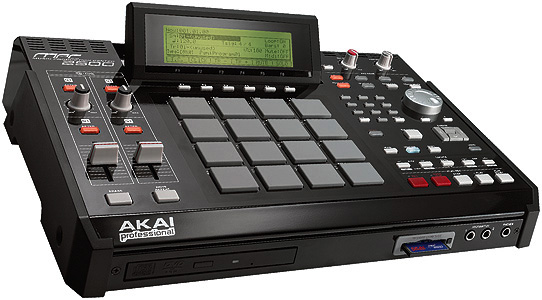
After already being really, really naughty with the customers who bought MPC 2000s in the late 90s Akai lead the introduction of the MPC 2500 pretty much to a fantastic desaster again. Anyone recalls? The MPC 2000 was so buggy when released that it represented more of an option to a hardware then a finished product. It took months until it was really useable but the cult around the MPC Line (originating back to the superb Roger Linn's MPC 60 to 3000 models) was so strong that it had almost no influence on reviewers in audio magazines. So it seems history is repeating again - hey wait, don't fall asleep! this time the story ends up much more interesting...

The purchase of the shiny new black polished MPC 2500 soon brought headache
and anger management problems to some users who bought the machine right after release: Twice a week the MPC would freeze while generating folders or destroy older work by overwriting existing data. Patterns and sounds with long filenames could be saved but when the machine was asked to reload them the filenames had already been shortened, therefore those programs where corrpupted too. But that wasn't all the pain: The menu of the MPC 2500 XL would erraticly jump inbetween menu-points and the keys & jogwheel would start to feel old within a few days of hardcore editing. When asked about refunds or repairs the shop where you bought the MPC would point to Akai service which in return would simply not answer your emails. The regularly updated new MPC 2500 OSs solved some of the problems but the erratic file-managment persisited. In one word: Horrfying.

But this time the minutious effort of the Akai engineers to drive the new MPC 2500 users into sheer madness has been destroyed by some humane japanese code warrioirs with reverse engineering abilities. Hey, its just a computer with a harddisk after all, so it can be hacked. The so called JJ OS is the effort of a japanese programer group called Japenese Jenius that already hacked the cute little MPC 1000 and gained extreme cult status in the electronic music world within short time. In an age where modifications and extreme circuit bending activities are a popular sport it is not so surprsing that someone modifies an existing OS of a hardware. Nevertheless its amazing that a private person can fulfill the task of what a complete development facility seems to be incapable of. Shame on you Mr. and Mrs. Akai. You can do better then that. Yes, we know that Akai has been sold to Numark and there has been changes. But so what? Are you people selling hardware or not? If the MPC is not finished why don't you simply make the OS open source and give the people an SDK at their disposition?

However. The JJ OS for the 2500er is based on the hack of the MPC 1000 OS, therefore some features of the 2500er are wiped out when you install it. But since you gain some other very valuable hot features which nobody thought would be implemented any day soon it is pretty much worthwile to try it out. A CD-burning option is anounced for 2007.

One question remains: Why did Akai ever fire Roger Linn?

bob humid, digging deep for bobsonic

Sunday, October 15, 2006

The Future Of Audio-DSP


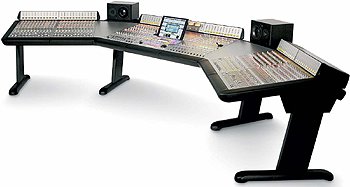
Fairlight, the inventor of the Fairlight CMI and the one and only company that feverishly insists on pushing the envelope regarding the development and manufacturing of high-end digital mxing consoles that could easily win any set decoration award for Sci-Fi Movies has (drrrrrumroll) ...well, pushed the envelope again. But this time its not about the looks, the sexy knobs and pulsating buttons or slick sliding futuristic foxy faders. No! Its about the heart of (your PC) machine and about making your CPU jealous as a jellyfish envying the strength of aerogel.

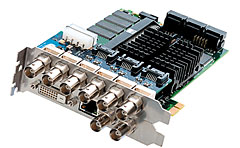
The Fairlght CC-1 is a PCI-Card that fits into most modern Windows XP-based PCs and enables the performance-hungry sound-engineer-of-today to evoke an unhealthy feeling of world-domination-super-powers within the deepest soul of the audio tweaking heart. The Card introduces a new FPGA-powered Multimedia-Engine-On-A-Chip developed by Altera Corporation promising a quantum leap in performance that is capable of "immediately obsolete DSP". Howzthat you ask?

According to Fairlight the Crystal Core CC-1 "enables two hundred plus channels of audio recording, editing, mixing, I/O and plug-ins, with extremely low latency and full processing capability on every channel. Dynamic Resolution Optimization (DRO) feature supports concurrent floating and fixed-point manipulations." This sounds indeed sexy, but what does it mean concretely? Let's look at the features: Those include 8 fully parametric EQs, 3 Dynamic-Stages for Compressor, Enhancer and Limiters, 72 Bit Resolution on every channel,
ASIO compatibilty and the ability to connect VST- and Rewire-Environments into your CC-1. This comes pretty close to what would resemble the funcionality and sound of a Fairlight dream console but without the actual control surface.

Anyone keen on mixing-down those supercool but somehow thinly sounding Reason tracks on a
Fairlight CC-1? Pump the shit up. You'll need something around 5000.00 $ for a basic system which might just give you the ability to do large industry mix-downs at home. Needless to say that CC-1-equipped PCs are theoretically limitless cascadable and preserve their low latency behaviour. I don't have a necessity to mixdown 1000 audio channels at once but the word "Expandable" has never been more true.

The CC-1 might definetly "shake the digital media world to its core by delivering new standards and raw performance capabilities previously unattainable even with the most expensive DSP based solutions" as the Fairlight promotion department claims.. Whether or not it really "instantly enables powerful new business and production models that will open up new opportunities for everyone” will be proven by the future. At the end of the day every Hardware FPGA, CPU or DSP needs useful software and I am not yet ready to give away my two creamy and phatty Universal Audio UAD-1 DSP Cards and all the little Fairchilds 670s, LA-2As, Pultecs and Neves that live inside... But it seems Fairlight is very open to OEM-cooperations and stirring up all the aforementioned facts could lead to some incredibly scary new products for audio professionals. I am really anxious to know what happens next...

Oh, I almost forgot. Digidesign's fearful reaction on the CC-1 announcement can be traced here.

bob humid, from the technological warfront. over and out.